
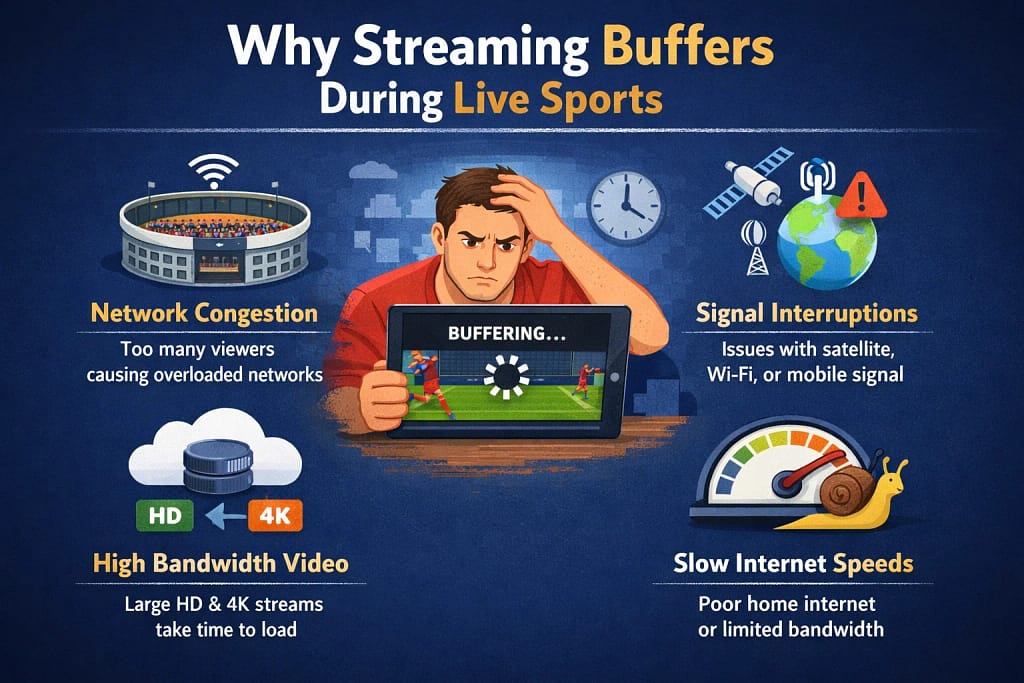
Why Streaming Buffers Live Sports
Introduction
Streaming live sports online has become increasingly popular in the UK, allowing viewers to watch matches, events, and broadcasts through internet-based services rather than traditional television subscriptions.
However, many viewers experience buffering or interruptions while watching live sports streams. This can be particularly frustrating during important moments in a match or event, when the stream pauses or drops in quality.
Buffering occurs when the streaming device temporarily stops playback while waiting for additional data to load. This often happens when the internet connection becomes unstable or when the network cannot deliver video data quickly enough.
Understanding why streaming buffers during live sports can help viewers identify the causes of the problem and take practical steps to improve their streaming experience.
Many viewers searching why streaming buffers live sports simply want to understand what causes interruptions during live broadcasts.
How Live Sports Streaming Works
When viewers stream live sports online, video data is delivered continuously from the streaming service to the device being used to watch the event. Unlike on-demand video, which can load several minutes of content in advance, live sports streams must deliver video in real time as the event happens.
Because the video is transmitted live, the streaming platform must send data to thousands or even millions of viewers at the same time. The viewer’s device then receives that data through the internet connection and converts it into video that can be displayed on the screen.
To keep the video playing smoothly, the device stores a small amount of video data in a temporary buffer. If the internet connection slows down or becomes unstable, the buffer may run out of data, causing the stream to pause while the device waits for more video to arrive.
This is why viewers sometimes experience buffering during live sports streams, particularly when network conditions change or when the connection speed cannot keep up with the video being delivered.
Understanding why streaming buffers live sports can help viewers identify connection problems that affect real-time broadcasts.
Common Reasons Live Sports Streams Buffer
Several factors can cause buffering when watching live sports online. Because live streaming requires a constant flow of data, even small disruptions in the connection can interrupt playback.
One of the most common causes is slow or unstable internet speeds. If the connection cannot deliver video data quickly enough, the streaming device may pause the video while it waits for additional data to arrive.
Network congestion can also contribute to buffering. When multiple devices in the home are using the internet at the same time for downloads, gaming, or streaming, the available bandwidth may become limited.
WiFi signal strength is another important factor. If the streaming device is located far from the router or separated by walls and obstacles, the signal may weaken before reaching the device. This can result in inconsistent connection speeds and interruptions during playback.
In some cases, buffering may also occur when streaming services experience heavy demand. Popular live events can attract large numbers of viewers at the same time, which can place extra pressure on streaming servers and network infrastructure.
Understanding these common causes helps explain why streaming buffers during live sports and highlights the importance of maintaining a stable internet connection and properly configured streaming device.
Several technical factors explain why streaming buffers live sports, including internet speed, network congestion, and WiFi signal strength.
How to Reduce Buffering During Live Sports Streaming
There are several practical steps viewers can take to reduce buffering when watching live sports online. In many cases, small improvements to the home network can significantly improve streaming stability.
One of the most important factors is maintaining a stable internet connection. Streaming live sports requires a consistent flow of data, so a reliable broadband connection is essential for smooth playback.
Improving WiFi coverage within the home can also help reduce interruptions. Positioning the router in a central location, limiting obstacles between the router and the streaming device, and reducing interference from other wireless devices can improve signal strength.
Another helpful step is limiting heavy internet usage while streaming. Large downloads, online gaming, or multiple devices streaming video at the same time can place additional strain on the network and reduce the bandwidth available for live sports streams.
Viewers experiencing frequent interruptions may also benefit from learning how to fix Firestick buffering in the UK or exploring ways to improve WiFi for streaming TV in the UK, both of which provide practical guidance for improving streaming performance.
Improving home network stability can significantly reduce the issues behind why streaming buffers live sports streams.
Reliable Streaming Platforms and Stable Connections
While internet speed and WiFi strength are important factors in streaming performance, the reliability of the streaming platform itself can also influence the viewing experience. Well-maintained streaming services are designed to deliver video efficiently across different devices and network conditions.
When a streaming platform uses stable infrastructure and optimised delivery systems, viewers are less likely to experience interruptions while watching live broadcasts. This is particularly important during live sports events where buffering can interrupt key moments.
Streaming devices such as Firestick, smart televisions, and other streaming platforms can perform well when paired with reliable services and a stable internet connection. When the device, network, and streaming platform all work together effectively, viewers can enjoy smooth playback in HD, UHD, or even 4K quality.
For viewers who want to test how a modern streaming platform performs on their device, trying a short-term VIP Viewing Pass can provide a simple way to explore available channels and features.
Final Thoughts
Live sports streaming can deliver an exciting viewing experience, but buffering can quickly disrupt important moments during an event. Understanding the reasons why streaming buffers during live sports can help viewers identify the causes and take practical steps to improve their setup.
By maintaining a stable internet connection, improving WiFi coverage, and using reliable streaming platforms, households can significantly reduce interruptions and enjoy smoother live sports streaming.
With the right combination of device, network setup, and streaming service, watching live sports online can be a convenient and reliable alternative to traditional television broadcasting.
Learning why streaming buffers live sports can help viewers make simple changes that improve streaming performance.