
How Streaming TV Works
Introduction
Streaming television has become one of the most common ways for people in the UK to watch live channels, films, and on-demand entertainment. Instead of relying on traditional broadcast methods such as cable or satellite, streaming delivers video content through the internet.
Many viewers use streaming devices such as Firestick, smart televisions, or other internet-connected platforms to access streaming apps and services. These apps allow users to watch live television, explore on-demand content, and access entertainment from a wide range of sources.
Despite its popularity, some viewers are still unsure how streaming technology actually works behind the scenes. Understanding the basics can help users get the most out of their streaming setup and improve their overall viewing experience.
In this guide, we’ll explain how streaming TV works and outline the key components that make internet-based television possible.
Many viewers searching how streaming TV works want a simple explanation of how video is delivered through the internet to their device.
How Streaming TV Delivers Video Content
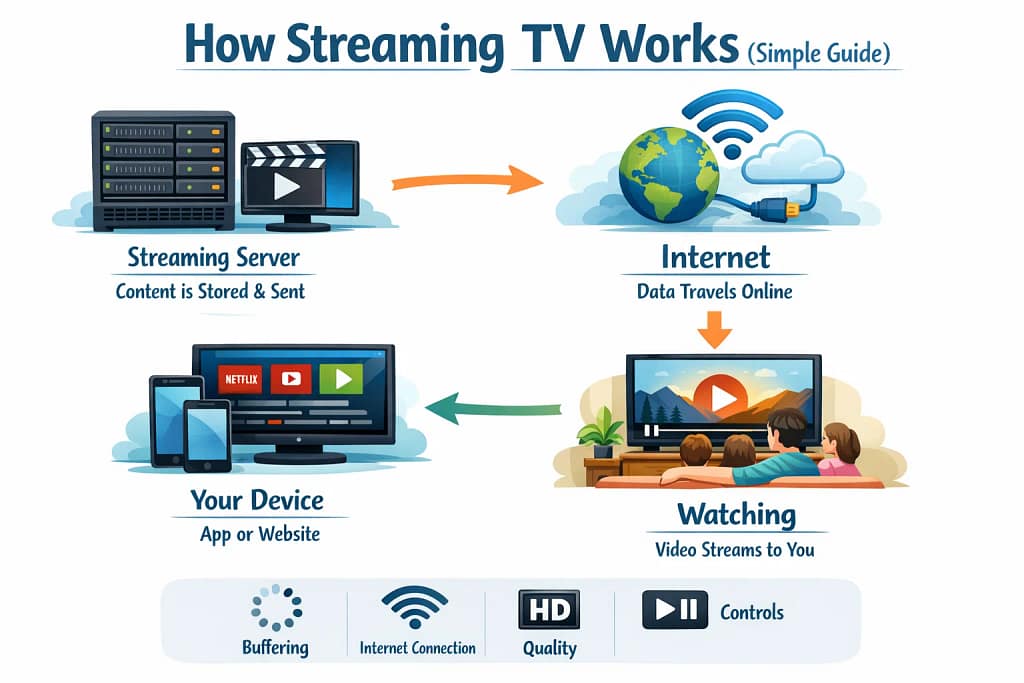
Streaming television works by sending video data over the internet from a remote server to a user’s device in real time. Instead of downloading an entire programme before watching, the content is delivered in small data segments that are played almost immediately.
When a viewer selects a programme or live channel, the streaming service begins transmitting video data to the device. This data is temporarily stored in a small buffer, allowing the video to play smoothly while additional data continues to load in the background.
The streaming device then converts this data into video and audio that can be displayed on the screen. As long as the internet connection remains stable and fast enough, the stream continues without interruption.
This process explains how streaming TV works and why a consistent internet connection is essential for maintaining smooth playback and avoiding buffering issues.
Devices Used for Streaming TV
To access streaming television, viewers need a compatible device that can connect to the internet and run streaming apps. Several types of devices are commonly used in the UK to watch streaming content.
One of the most popular options is the Amazon Firestick, which connects directly to a television through the HDMI port. Firestick devices allow users to install streaming apps and access a wide range of content through a simple interface.
Smart televisions are another widely used option. Many modern TVs include built-in streaming capabilities, allowing users to install apps directly on the television without requiring additional hardware.
Other devices, such as streaming boxes and internet-connected media players, can also be used to access streaming services. These devices often provide additional flexibility and support a variety of apps and features.
Understanding the devices available helps explain how streaming TV works and how viewers can choose the setup that best suits their needs.
Internet Requirements for Streaming TV
A stable internet connection is essential for smooth streaming. Because video content is delivered continuously, the speed and reliability of the connection directly affect playback quality.
For standard definition streaming, lower speeds may be sufficient, but HD and 4K streaming require faster and more consistent connections. If the connection becomes unstable, viewers may experience buffering, reduced picture quality, or interruptions during playback.
WiFi signal strength also plays an important role. Even if broadband speeds are high, poor WiFi coverage inside the home can affect streaming performance. Distance from the router, physical obstacles, and interference from other devices can all weaken the signal.
Understanding internet requirements is a key part of learning how streaming TV works and helps viewers take steps to improve their setup for a better viewing experience.
Why Streaming Can Buffer or Lag
Even when streaming technology works well, viewers may occasionally experience buffering or lag during playback. This usually happens when the streaming device cannot receive video data quickly enough to maintain smooth playback.
One of the most common causes is an unstable or slow internet connection. If the connection speed drops or fluctuates, the buffer may run out of data, causing the video to pause while it reloads.
Network congestion can also affect performance. When multiple devices are using the internet at the same time, the available bandwidth may be reduced, leading to interruptions during streaming.
WiFi signal strength is another important factor. Weak signals caused by distance from the router or interference from other devices can result in inconsistent connection speeds.
Understanding these issues is an important part of learning how streaming TV works and helps viewers identify practical ways to improve streaming performance.
Reliable Streaming Platforms and Stable Performance
While understanding how streaming TV works helps explain the technology behind online viewing, the quality of the streaming platform itself also plays an important role in the overall experience. Reliable services are designed to deliver content smoothly across different devices and network conditions.
Well-maintained streaming platforms use stable infrastructure and optimised delivery systems to ensure that video content plays without interruption. This is particularly important when watching live channels or high-quality content such as HD and 4K video.
Streaming devices such as Firestick, smart televisions, and other internet-connected platforms perform best when paired with dependable streaming services and a stable internet connection. When these elements work together, viewers can enjoy consistent playback and a better overall viewing experience.
For viewers who want to explore modern streaming options, trying a short-term VIP Viewing Pass can provide a simple way to test how a streaming service performs on their device.
Final Thoughts
Streaming television has changed the way people watch entertainment in the UK. By delivering video content through the internet, streaming platforms provide flexible access to live channels, films, and on-demand programmes.
Understanding how streaming TV works helps viewers make better decisions about their devices, internet connections, and streaming services. With the right setup, households can enjoy a smooth and reliable viewing experience.
As streaming technology continues to improve, more viewers are choosing internet-based television as a modern and flexible alternative to traditional broadcasting.